


VENICE, 7 September 2026 — Susan Sarandon said on Sunday, 6 September, that she continues to lose film opportunities because of her public advocacy for Palestinians.
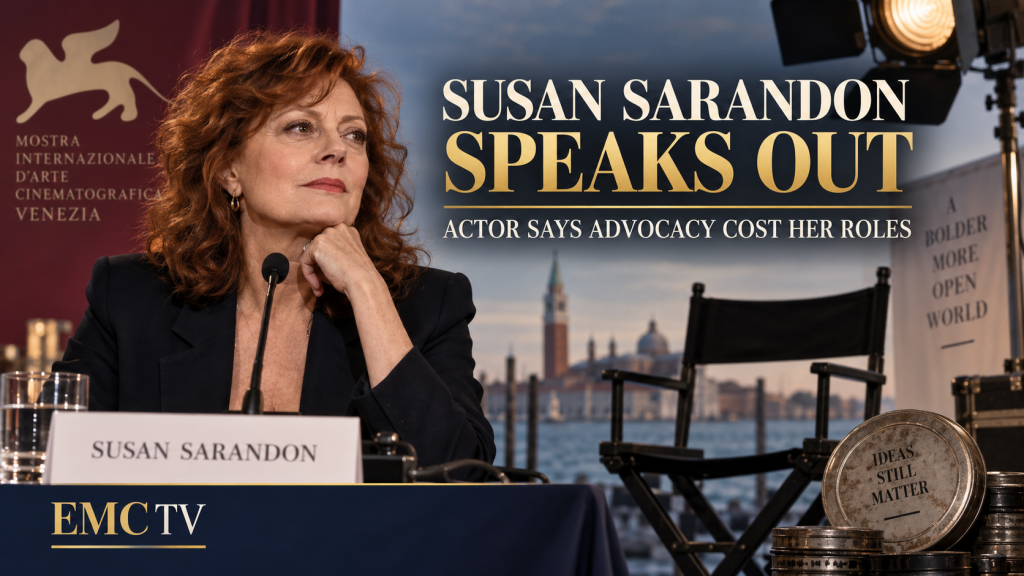
She made the statement at the Venice International Film Festival, where “Echo Chamber” was presented. Reuters reported her remarks, while People independently covered the appearance.
The wording requires care. Sarandon’s statement is a first-person account of consequences she says she has experienced. It is not, by itself, documentary proof of a coordinated blacklist or evidence explaining every casting decision.
No named studio or producer was adjudicated in the reports. Responsible publication must therefore attribute the claim directly to her and avoid turning an assertion about private employment decisions into a settled fact.
The appearance occurred in a festival setting where performers routinely discuss films and public issues. La Biennale’s official page for “Echo Chamber” provides the institutional context.
The controversy surrounding political speech in entertainment is broader than one actor. Stars, employers, audiences and campaign groups increasingly contest where personal advocacy ends and professional risk begins.
For Nigerian creatives, the practical lesson is not that artists should avoid public positions. It is that they should understand their contracts, brand relationships and reputational exposure before entering high-stakes debates.
Artists should distinguish verified information from slogans, retain professional counsel when necessary and prepare for both support and commercial backlash. Employers, meanwhile, should base decisions on lawful and consistently applied policies rather than opaque external pressure.
For EMC TV, the strongest angle is: “Can a celebrity speak freely without losing work?” Build the segment around attribution and evidence. Include an entertainment lawyer, casting professional and free-expression advocate, and separate contractual rights from moral and political arguments.
Any specifically named company should be given a fair opportunity to respond. Where no employer is identified, presenters must continue saying “Sarandon says.” Repetition does not transform an attributed allegation into an independently established conclusion.